Céramique du monde
Who are we?
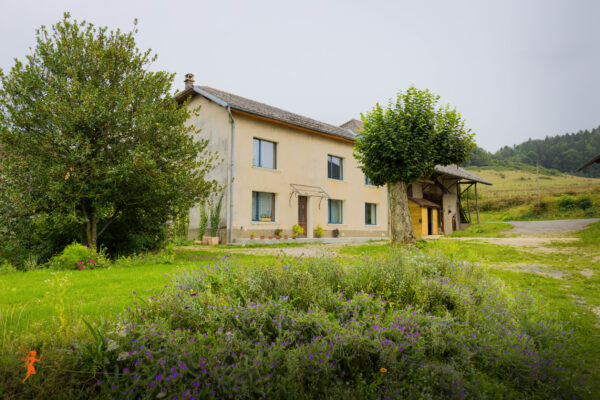
Céramique du Monde is an international event dedicated to ceramics as a universal language and bridge between cultures. The project was born out of the Rossmery Cerámica workshop in Merlas, France, with the desire to create a space for exchange between artists, ceramists, students and collectives from different parts of the world. We believe in clay as a common ground where ancestral memory, contemporary experimentation and collective creation coexist. More than an event, Céramique du Monde is an experience of conviviality, learning and dialogue. Over several days, we share our knowledge, techniques, processes and diverse points of view, creating human and artistic bonds through manual work. Our approach combines tradition and modernity, honouring the knowledge passed down from generation to generation while paving the way for new creative research. Because ceramics belong to all territories. And when shared, they become a language without borders.
Céramique du monde
The programme
Céramique du Monde offers an intensive experience of creation, exchange and learning around contemporary ceramics and ancestral knowledge.
Programme
Application
Call for applications
The call for applications to participate in Céramique du Monde, an international gathering of ceramic artists to be held in Merlas, France, from 6 to 10 July 2026, at the Rossmery Cerámica workshop, is now open.
The packages

María Estela Moreno – Argentina
Ceramist with over thirty years of experience in artistic and artisanal ceramics. Since 2000, she has been teaching at the artistic ceramics workshop at the National University of Catamarca and, since 2012, she has been part of the ceramics department of the visual arts faculty at ISAC (Catamarca).
She works with local red clays that she extracts and treats manually, using ancestral techniques such as roller modelling and pinching, decorated with her own engobes and fired in a wood-fired kiln.
She has participated in national and international exhibitions and has received important distinctions, including a mention of artistic merit at the VII Intercontinental Biennial of Indigenous Art (Lima, 2018) and second prize at the Catamarca Bicentennial Visual Arts Salon (2024).

Carolina Lainez – Chilie
She became interested in ceramics in late 2006 and has since developed a body of work centred on indigenous themes, the result of a largely self-taught education enriched by courses and workshops. She works with techniques such as throwing, slab building and modelling, applying oxides and glazes to sculptural, decorative and utilitarian pieces. Her practice goes beyond creation: she promotes training and community spaces such as the ‘Manos de Barro’ (Hands of Clay) ceramists’ meeting, in addition to directing and coordinating cultural projects funded by Fondart and Conadi, residencies, seminars and identity-based murals. She has participated as a workshop leader and exhibitor at meetings and festivals in Chile, Peru, Bolivia, Brazil and India, consolidating a career in which clay is a tool for memory, identity and collective construction.

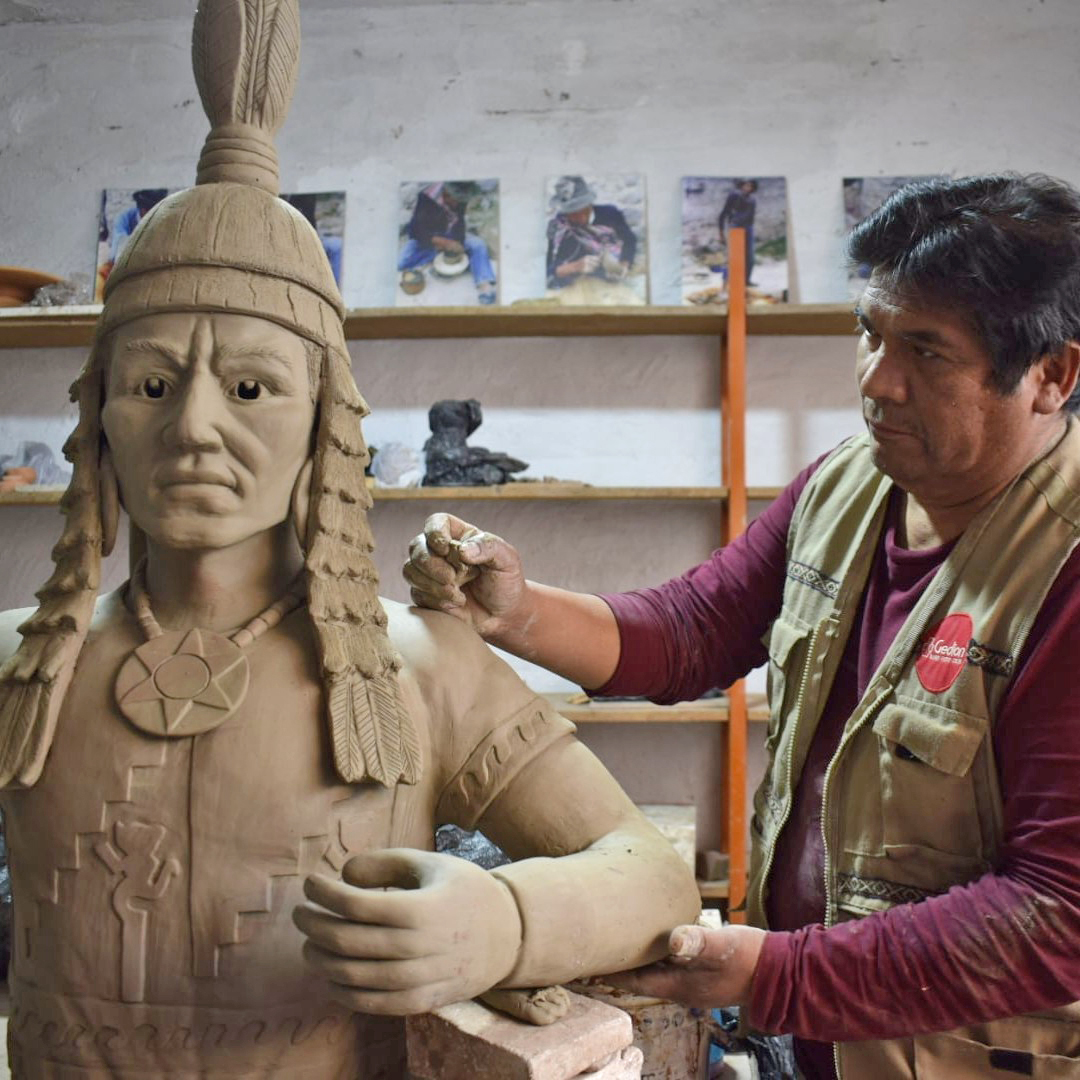
Gedion Caseo Fernández Nolasco – Peru
Member of the AIC (International Academy of Ceramics) A ceramist born in Quinua, Ayacucho, he learned the craft at the age of seven from his grandfather in the village of Huallhuayocc, between Sunday fairs and pottery made with his family.
His work, deeply linked to Andean identity and the memory of his people, has been awarded prizes in national and international competitions, such as the one in Kyoto, Japan, and presented in individual and collective exhibitions in Peru, America, Europe and the United States, including the Smithsonian’s National Museum of the American Indian.
A ceramics teacher in the municipality of Ate, he has received the Joaquín López Antay Award and the title of Amauta of Peruvian crafts, as well as being a member of the International Academy of Ceramics (AIC) in Switzerland.

Carlos Alberto Vega – Argentina
Ceramist with 50 years of experience. Trainer and technical assistant with extensive national and international experience, he has devoted much of his career to training teachers and artists in municipal workshops, fine arts schools, and cultural centres throughout the country. As a technical assistant to the Ministry of Culture, he has advised both industrial and artistic ceramic production companies. A specialist in firing technologies and kiln construction—from low-cost systems to high-temperature firing—he has coordinated provincial and national meetings of ceramists, as well as leading inclusive workshops for people with disabilities. His work has been exhibited in Argentina and abroad, especially in Italy and Puerto Rico, and he has created murals in different Argentine provinces. His career combines creation, technical research and a strong commitment to training and community development in the field of ceramics.

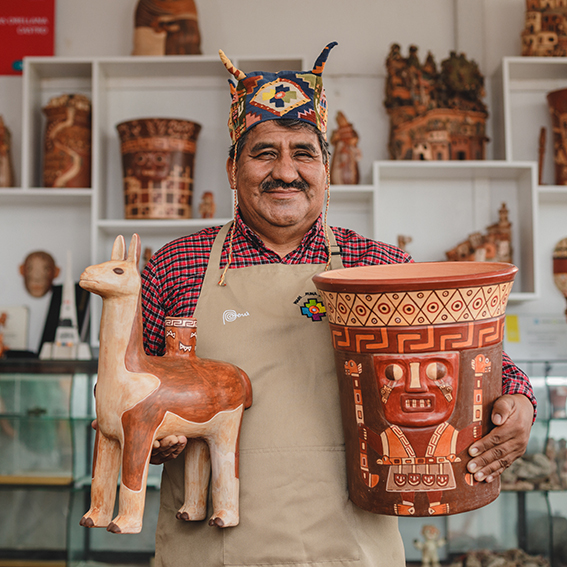
Leonidas Orellana Castro – Peru
Traditional ceramist from Quinua, Ayacucho, Peru Leonidas Orellana Castro is a master traditional ceramist from Quinua with over 40 years of experience. He is the heir to ancestral knowledge passed down from his grandfather and is deeply connected to the traditions of Ayacucho.
Founder of the Wari Runa workshop, he has trained new generations of artisans and encouraged the development of traditional ceramics in Lima and Ayacucho. His work preserves traditional techniques and materials, including the use of engobes and the iconography of the Wari Empire, adapting them to new markets without losing their cultural identity.
He has held more than 30 national and international exhibitions in America and Europe, promoting Quinua ceramics worldwide. Among his many awards, it is worth mentioning the Joaquín López Antay National Prize (2014), the highest distinction awarded to masters of Peruvian folk art.

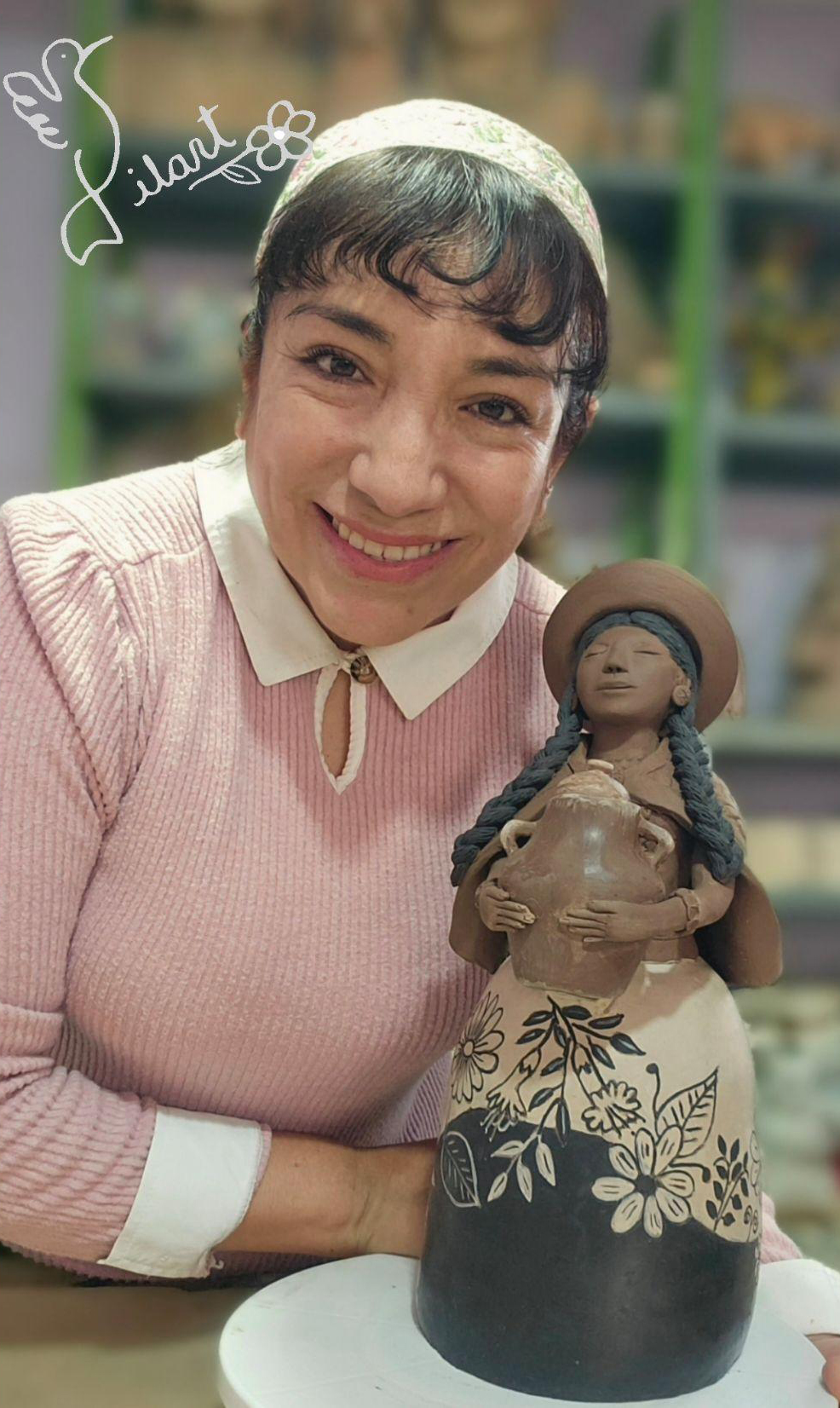
Gregoria Pilar Soto Orizano – Peru
Peruvian ceramist and visual artist, creator of Pilart. Born in Cerro de Pasco. Her work preserves Andean memory as a living imprint in clay. She works with the female figure as a territory of care, strength and silence.
Each piece is modelled by hand, in dialogue with the earth and its rhythms. “My forms are imbued with calm, protection and connection with the ancestral.” ‘I believe in ceramics as an act of encounter: an art that sustains and is shared.’

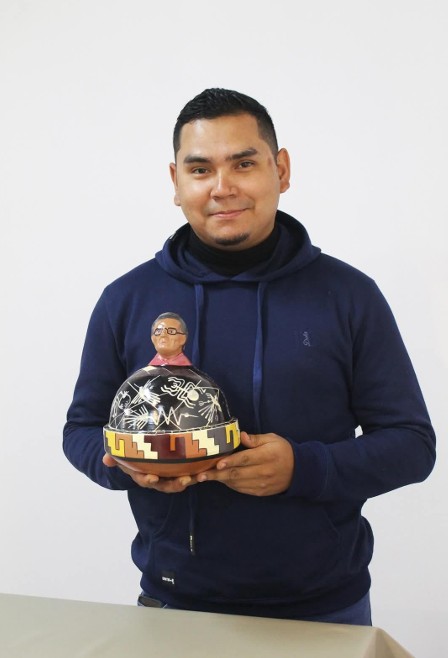
Pedro Andree Crisóstomo Calle – Perú
Heirs to a tradition born of fire and memory. From childhood, he learned the art of Nasca pottery, passed down by his grandfather Andrés Calle Flores and his parents, guardians of the family legacy. From the age of eight, the brush and clay shaped his career.
He trained in art and tourism so that he could convey not only the history but also the spirit of each piece. Today, he runs the family workshop and presents Nasca pottery at events and exhibitions in Peru and abroad. ‘My work is synonymous with continuity, identity and commitment to an ancestral tradition that is still alive today.’